
Client profile
A biopharma commercial field organization using an existing CRM was manually documenting HCP interactions. Representatives needed a faster way to turn what they remembered immediately after a call into structured, usable information for both the field and home office.
Context and objectives
Field dictation solved the first part of the problem. Speaking a note was quick, but that note still had to become a usable CRM record. Representatives or support teams had to transcribe, categorize, and re-key important details such as the HCP, account, product discussed, question raised, interaction outcome, follow-up commitment, and next step.
That second documentation cycle created administrative burden at exactly the wrong time—between visits or at the end of a long field day. Details could be omitted, fields could remain incomplete, and safety- or compliance-relevant language might not be surfaced until well after the interaction.
The objective was not to replace the representative’s judgment or remove review. It was to let a rep speak naturally once and have the system transform that debrief into structured, reviewable, CRM-ready intelligence while the context of the conversation was still fresh.
The solution
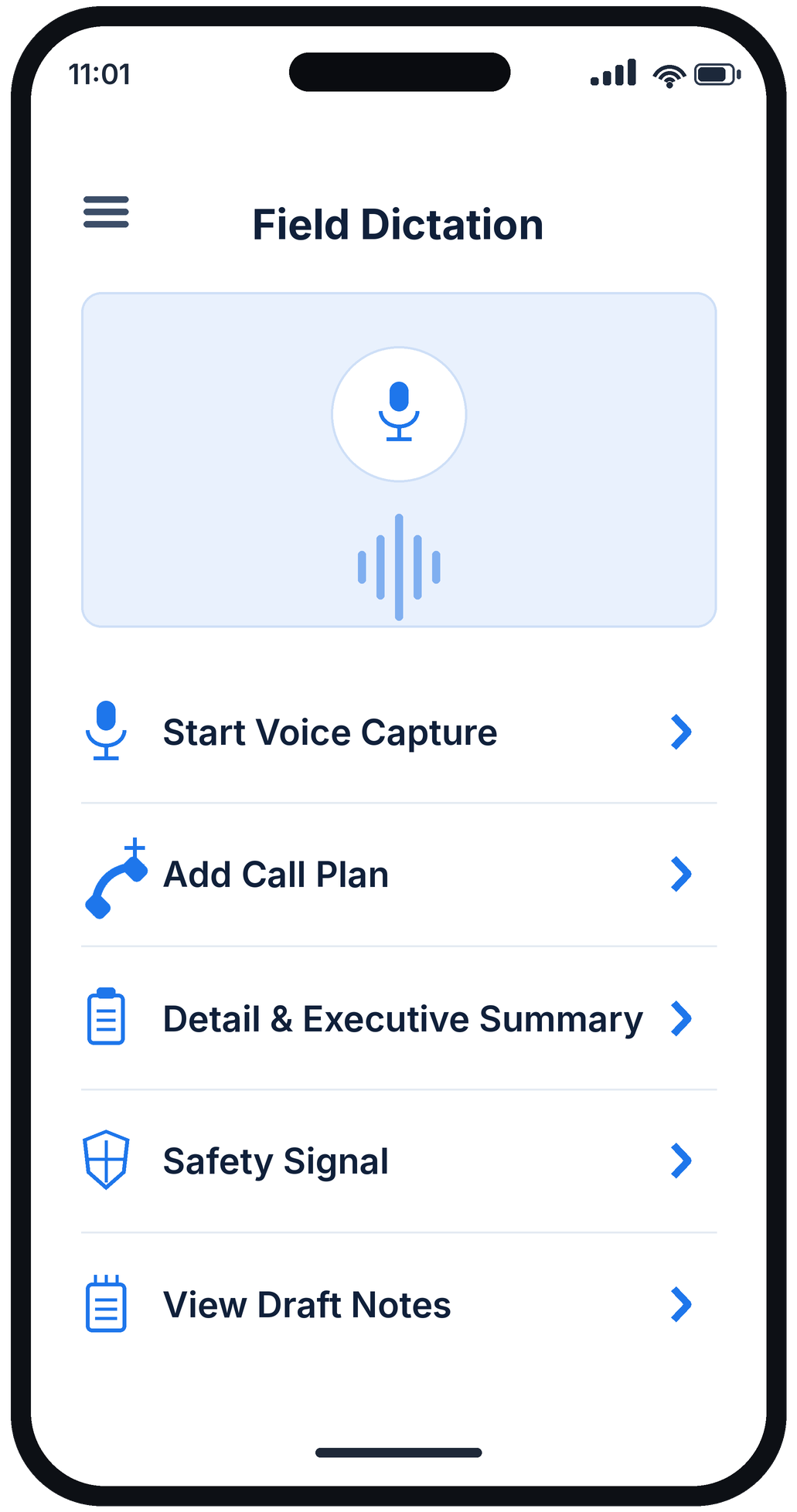
- Improzo built a voice-to-CRM workflow around the representative’s existing field process. The rep records a natural post-call memo rather than filling out a long form.
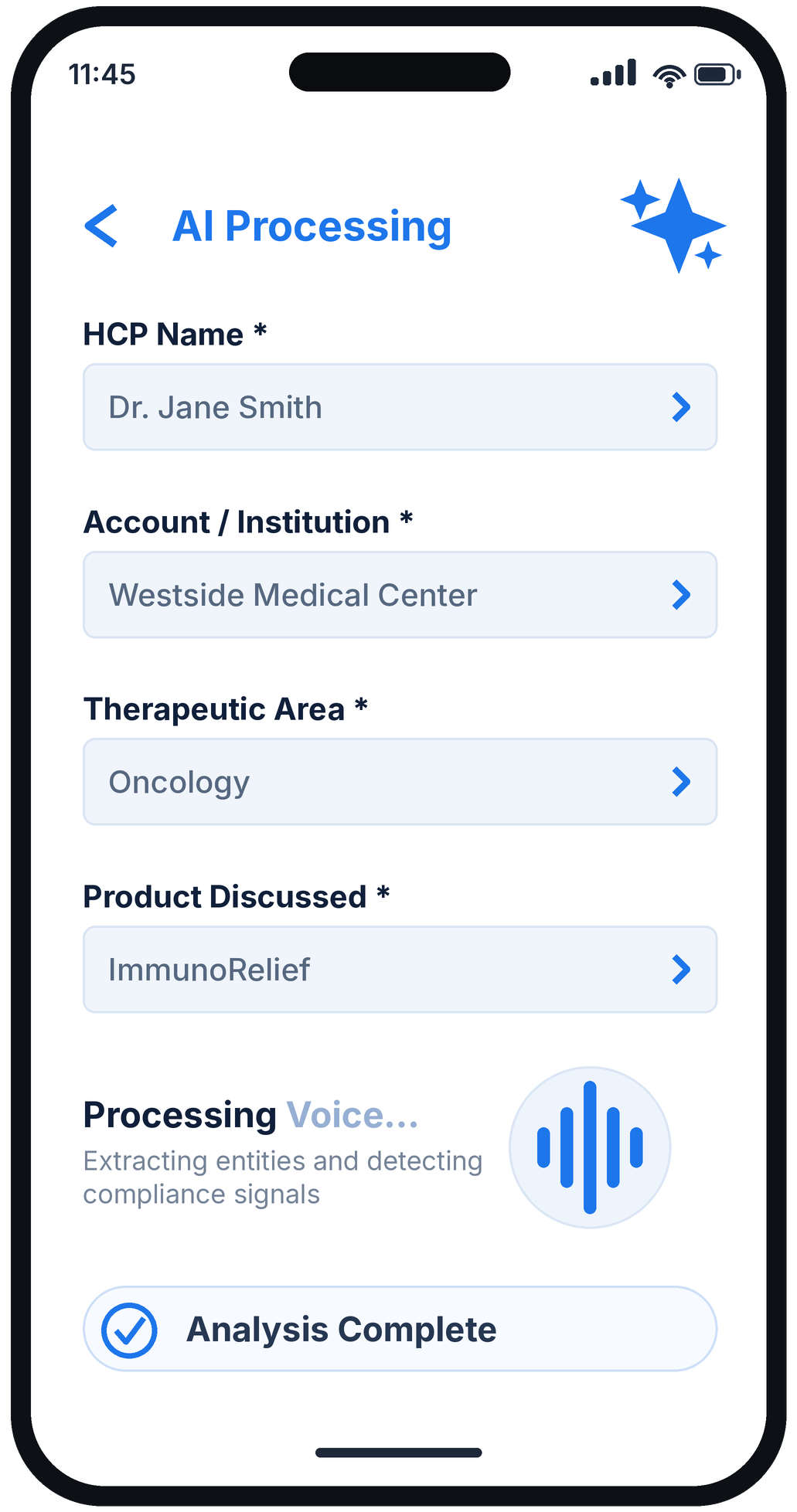
- The system resolves pharmaceutical terminology—including brand, molecule, study, biomarker, indication, and safety language—before structuring the interaction.
- Relevant information is mapped into CRM-ready fields such as HCP, account, product, key question, interaction outcome, commitment, and follow-up date.
- Governance checks run inline to identify adverse-event, product-complaint, escalation, or other compliance-relevant signals that may require attention.
- The representative remains in control of the final record. Instead of reviewing every extracted field, the workflow focuses attention on the limited items worth confirming. Once reviewed, the same structured interaction can prepare downstream work such as the CRM call report, an approved-content follow-up email, and a follow-up task.
The impact
Internal engagement reporting showed a 80% reduction in documentation time. The largest operational change was the removal of the second documentation cycle: representatives no longer had to speak the interaction once and then reconstruct it again later for CRM.
Structured context also became available earlier to CRM and home-office workflows. HCP questions, commitments, and potential compliance signals could be surfaced closer to the point of capture rather than after manual re-entry.
The workflow is reusable across brands and field roles because the core components—voice capture, pharmaceutical terminology resolution, structured extraction, governance checks, human review, and action routing—can be configured for different CRM schemas and business rules without changing the basic user experience.